A grower delivers their fruit on a Monday, the marketing company sells it over the course of the week at different prices and, weeks later, a settlement arrives with a single price per kilo. If nobody explains where that number comes from, it is only natural that they will be suspicious. This article looks at how the average settlement price is built up, what is worth showing the grower and which mistakes cause almost all the arguments.
What the average settlement price is
At many marketing companies, the fruit from several growers is pooled: it is handled on the same lines, packed under the same brands and sold to many customers. It is impossible to say that the box a customer in Germany bought on Wednesday was exactly the fruit of one particular grower. That is why the result of the sales is shared out among everyone who supplied fruit with the same characteristics in the same period.
Put simply, the average price is what has been earned from selling a homogeneous group of fruit divided by the kilos in that group, after deducting the costs that have been agreed. That group is usually defined by:
- Period: the week, the fortnight or whichever period your company uses.
- Product and variety: an early variety is not worth the same as a late one.
- Quality or grade: first class, second class, waste or industrial, depending on how you grade the fruit.
- Other criteria: size, type of packing, organic or conventional growing, if you distinguish between them when selling.
The finer the group, the fairer it is for whoever delivers good fruit, but the harder it is to explain. What matters is that the criterion is always the same and that the grower knows it before delivering.
How it is calculated, step by step
- Add up the sales of the group. All shipments of that fruit to customers in the period, at their final price (including any discounts, credit notes or claims that have been accepted).
- Subtract the common costs. Handling, packaging and materials, transport, commissions or whatever your agreements state.
- Divide by the kilos to be settled. Normally the net kilos received and accepted in that grade, not the kilos sold.
- Apply it to each grower. Their kilos in each group multiplied by the average price of that group.
- Add or subtract individual items. Advances already paid, packaging not returned, services provided to that grower and any taxes that apply.
An example with invented figures, just to show the mechanics: in one week, 40,000 kg of first-class strawberries are sold for €64,000. The agreed common costs add up to €12,000. That leaves €52,000, which divided by the 40,000 kg delivered gives €1.30/kg. A grower who delivered 3,000 kg of that grade receives €3,900 for that item, less their individual deductions.
What the grower wants to see in their settlement
A settlement that just says "kilos × price = total" raises questions. One that is understood at first glance usually includes:
| Item | Why it helps |
|---|---|
| Goods-in delivery notes settled, with date and kilos | They can check them against the copies they took away when delivering. |
| Kilos by grade or quality | It explains why not everything is paid at the same price. |
| Average price for each group and period | It lets them compare weeks and varieties. |
| Deducted costs, one by one | It avoids the feeling of "something has been taken off me and I don't know what". |
| Taxable base, taxes and total to be paid | It is what they will see in the bank. |
If you can also show how the average price has evolved over recent weeks, the conversation changes: it stops being "why are you paying me so little?" and becomes "how has the market gone?"
Mistakes that cause arguments
- Changing the criterion halfway through the season. Moving from settling weekly to fortnightly, or merging two grades, without warning. Even if the result is similar, the grower sees it as a change of the rules.
- Mixing kilos received and kilos sold. Between receipt and sale there are losses: dehydration, fruit that does not pass selection, returns. You need to decide, and explain, which kilos the calculation is based on.
- Costs that appear without explanation. If a cost was not in the agreement or does not show on the settlement, it will end up in an argument.
- Customer credit notes that arrive late. A claim resolved after settling forces an adjustment. It is best to agree how these are handled.
- Doubtful goods-in delivery notes. If the weight or grade at receipt was not clear at the time, the average price will not fix anything. That is where the problem starts.
The price must be agreed in writing
When the marketing company buys the fruit from the grower, the relationship falls under Ley 12/2013, de medidas (Spain's Law 12/2013 on measures to improve the functioning of the food supply chain). Its article 9 requires the food contract to set out, among other things, the price, which may be fixed or variable, but in the latter case determined only by objective, verifiable, non-manipulable factors expressly established in the contract. The same article requires that the price received by the primary producer be higher than their actual cost of production.
For a settlement at an average price, this means the contract must describe how that price is calculated: which sales count, which costs are deducted and over what period. The law excludes from its scope deliveries by members to their cooperatives or associations when their statutes oblige them to deliver. Each case has its nuances, so review your contracts with your adviser.
How to explain it in person
As well as the paperwork, the explanation given at the warehouse counts for a lot. Some approaches that work:
- Explain the criterion at the start of the season, not when the first complaint arrives.
- Always use the same sheet and the same order of items.
- Keep their signed goods-in delivery notes to hand: they settle almost all doubts about kilos.
- Separate what depends on the market (selling price) from what depends on their fruit (grade, waste).
- If there is a bad week, say so before the settlement arrives.
How Agrocom handles it
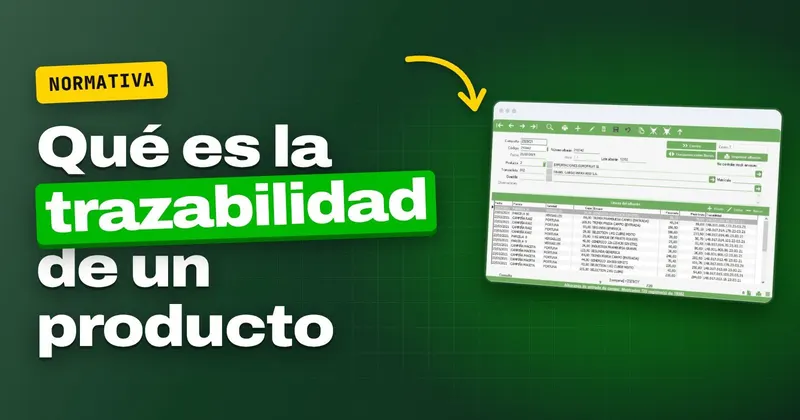
Agrocom settles with growers using a settlement wizard and an average price screen that adapts to each company's preferences. Each settlement records the grower, the season, the lines settled with quantity, price and amount, and the income, costs, taxable base and total to be paid.
What is settled comes from what is already recorded in the software: the goods-in delivery notes signed by the grower on the tablet and the shipments to customers. That way, when a grower asks, you have in front of you where every kilo and every euro comes from. You can see how it works on the grower settlements page.